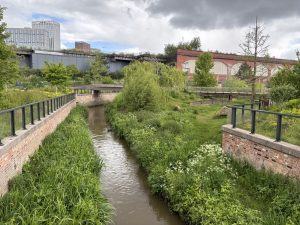

This week I was lucky enough to be trained in the art of Riverfly Monitoring by the fabulous Mike Duddy from the Mersey Rivers Trust. He trained a group of a dozen local people in the River Lostock at Cuerden Valley Park and we all learned how to undertake a kick-sample in the river, and then how to identify, quantify and score the invertebrates that we found in our sample. The Riverfly Monitoring is designed to be repeatable and reliable so that results can be compared from river to river and from season to season. Trends in invertebrate life can be tracked, and new or acute pollution problems become ‘visible’. The long-term biological dataset that is gathered by Riverfly Monitors all across the UK is building to become an incredibly useful resource. The insect populations reflect the health of the river and, even if you miss a significant pollution incident, its legacy will still be visible weeks later when we count the insects. The volunteers that were trained on Friday are all volunteers across the River Douglas catchment and we are planning to develop a monitoring regime to provide ongoing data across the tributaries and the main rivers. For my part, I am going to be carrying out Riverfly surveys on the River Lostock, upstream and downstream of the motorway outfalls for the next two years to see what impact the motorway runoff is having on the health of the river. Maybe you could undertake this training too, and become a volunteer monitoring the health of your local river? You can find more information here: https://www.riverflies.org/armi and if you speak to your local Rivers Trust, you may find that they are running courses that you can join.